Exporting Audit Data
Last updated: October 19, 2026
This article explains how to export audit data from the Xenia platform efficiently. You will learn the different export options and how to automate report deliveries to streamline your workflow.
1. Why Export Audit Data
Audit submissions live in Xenia's reporting system and are fully accessible within the platform. But there are scenarios where you need the data outside of Xenia:
Regulatory compliance files that require physical or archived records
Sharing audit results with a party who doesn't have Xenia access (a franchisor, a health inspector, a property owner)
Analyzing trends across hundreds of submissions in Excel
Building records for legal protection or insurance purposes
Scheduled reports delivered automatically to leadership every week or month
Xenia supports three distinct export types, each serving a different purpose.
2. Export Type 1 — Individual Checklist Report (PDF)
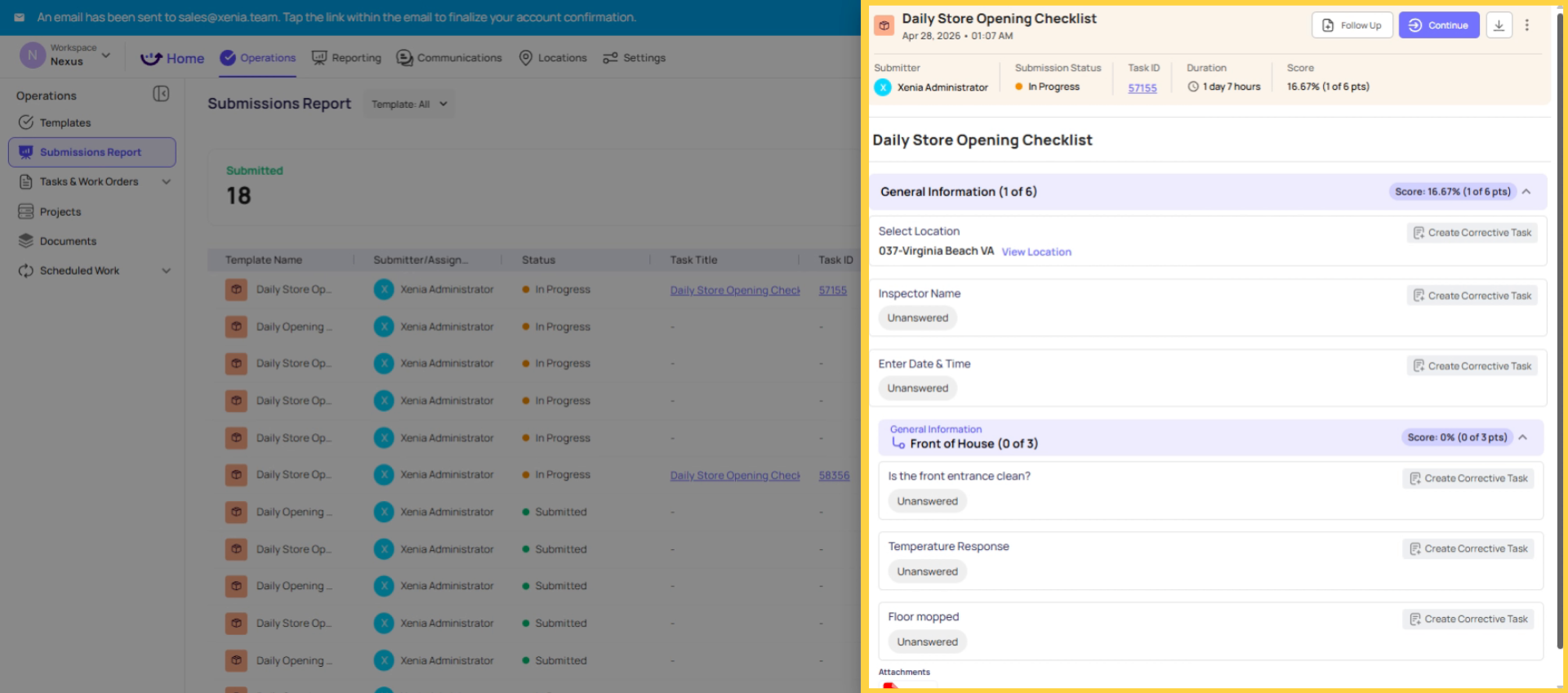
What it is: A detailed PDF summary of one specific checklist or audit submission — formatted and print-ready, including all responses, timestamps, photos, section scores (if scoring is enabled), the overall score and rating, and flagged items.
What it's good for:
Sending a single audit report to a franchisor, health inspector, or property owner
Attaching to a compliance file
Proof of work — the timestamped record with photos proves when the audit happened and what was found
Identifying backfilling — timestamps on each step reveal whether the audit was completed in real time or filled in retroactively
How to generate it:
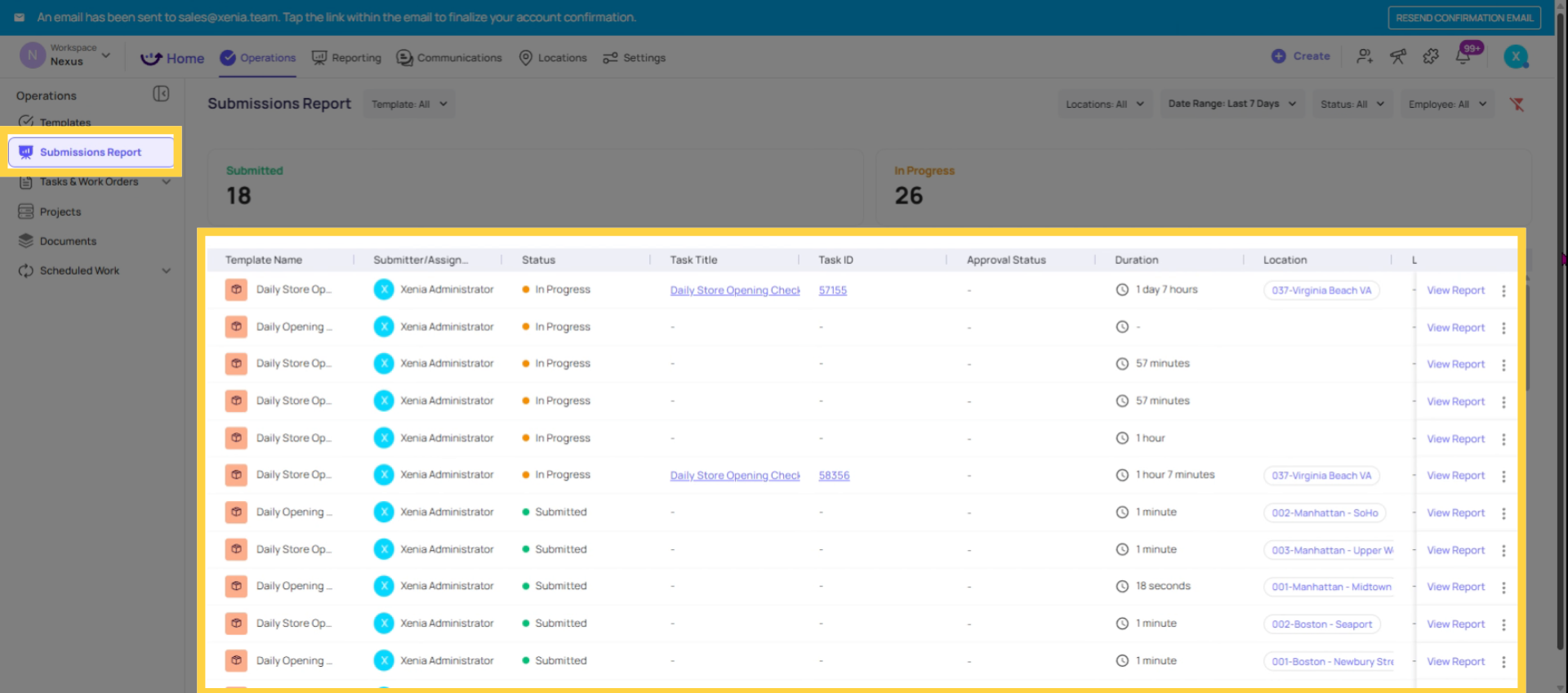
Go to Operations → Templates → [Audit Template]
Click into the Submissions view
Find the submission you want to export
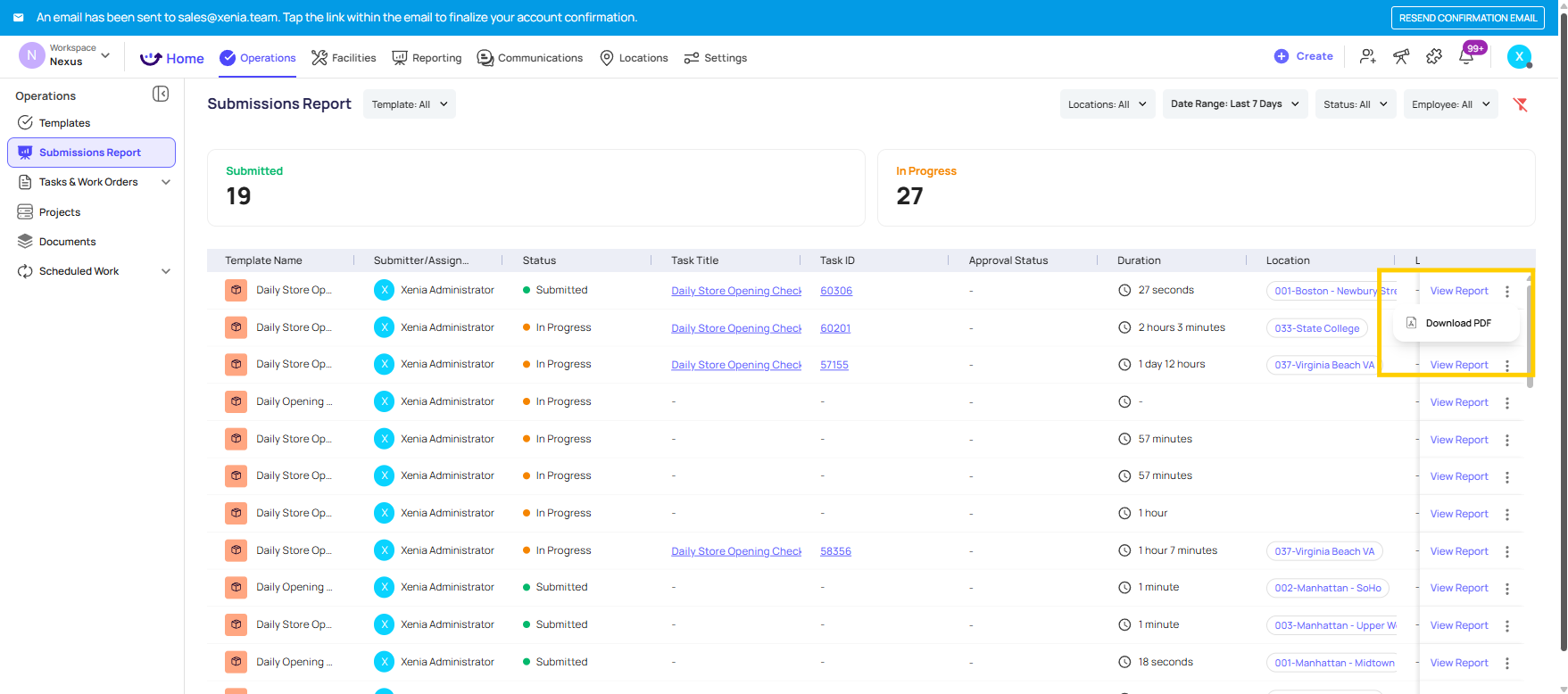
Open the submission → look for Download or Export PDF
The PDF generates immediately and downloads to your device
Also accessible from: The submission confirmation screen immediately after the audit is submitted. The auditor can download the PDF right there.
PDF size note: If the audit contained many high-resolution photos, the PDF may exceed ~25MB. In that case, a download link is provided in place of a direct file attachment. The full content is still accessible.
3. Export Type 2 — Checklist Response Log (Excel/CSV)
What it is: A flat Excel or CSV file containing every response to every completed submission for a given template, across all locations, within a selected date range. One row per submission, one column per step.
What it's good for:
Analyzing temperature log data across all locations over a month — every reading, every step, in a spreadsheet
Looking at survey responses in aggregate
Importing audit response data into an external analytics tool or compliance database
Finding patterns in log data (which locations consistently log out-of-range temperatures, which steps fail most often) that would take many individual report clicks to discover manually
How to generate it:
Go to Operations → Templates → [Audit Template]
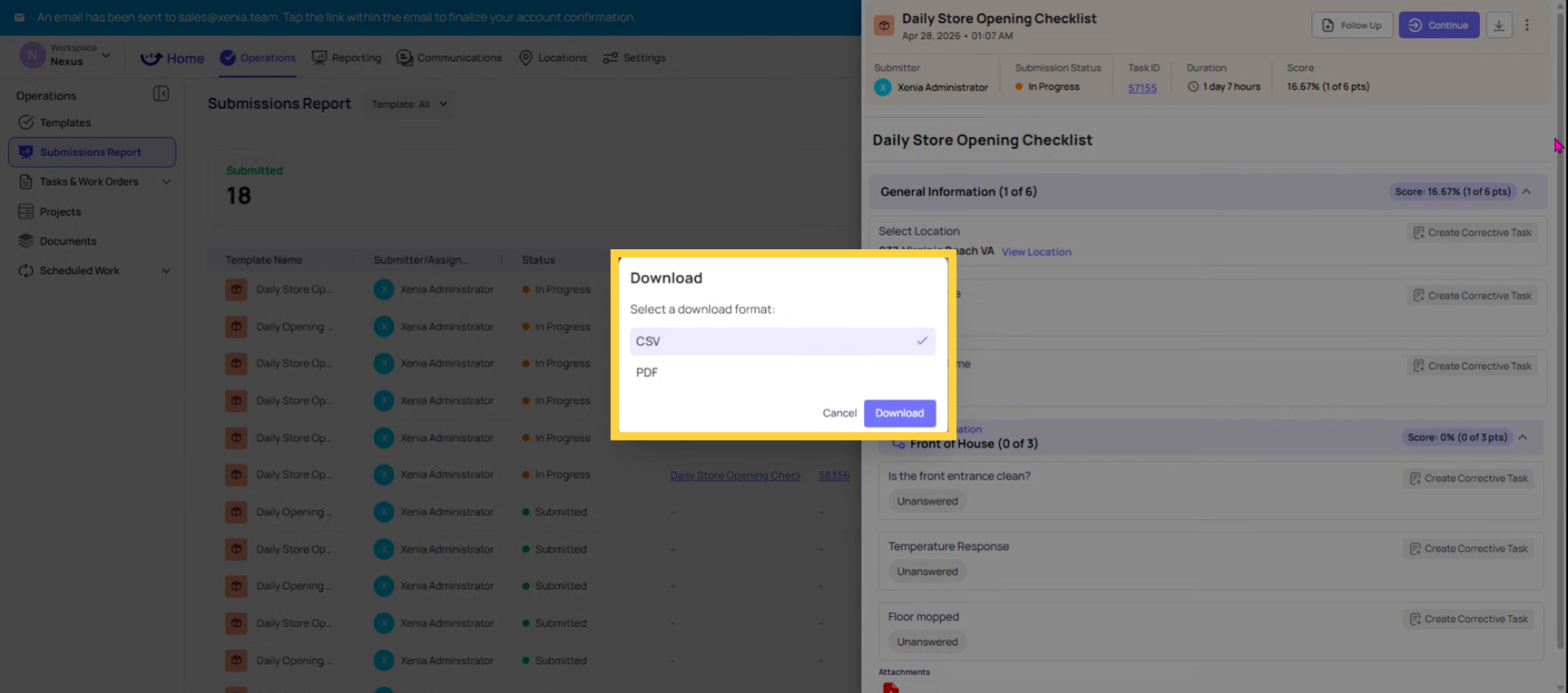
Find the Export or Download option — look for an export button in the submissions view or at the template level
Select Checklist Response Log (or equivalent export option)
Set the date range and any location filters
The file downloads as Excel/CSV
When to use this over the PDF: Use the PDF for a single submission that needs to be read or shared as a formatted document. Use the Response Log when you need to work with the data in bulk — sorting, filtering, pivoting across many submissions.
4. Export Type 3 — Task and Work Order Board Report (PDF or CSV)
What it is: A customizable report of your Tasks and Work Orders board — all the corrective tasks generated from audit workflows, filterable by date range, location, category, status, and assignee.
What it's good for:
Seeing all corrective actions generated from audit failures over a specific time period
Reporting on how many audit-triggered maintenance issues were resolved vs. still open
Work completed by a specific team in a specific time window
Sharing with a property owner or facilities director the volume and resolution rate of maintenance issues
How to generate it:
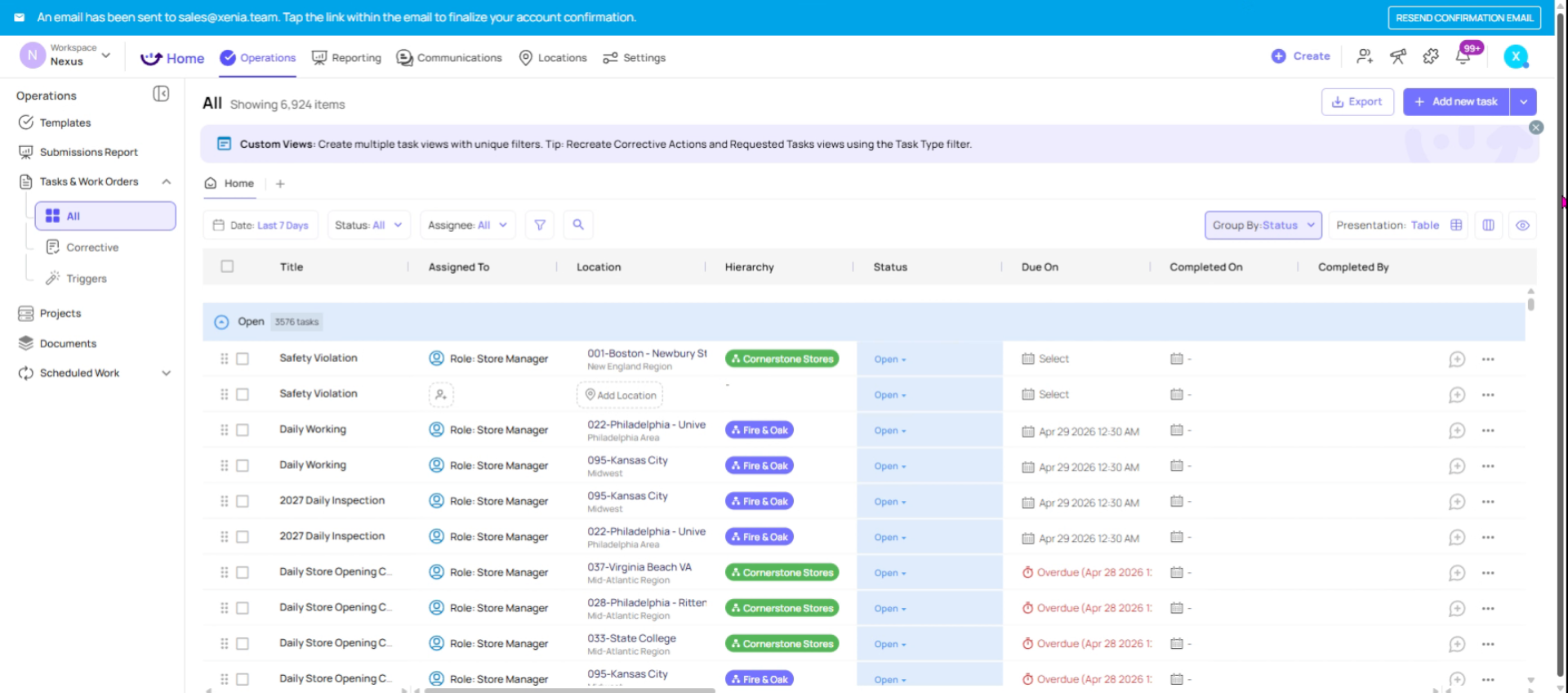
Go to Tasks & Work Orders
Apply your filters — date range, category (Audit Corrective Action), location, status
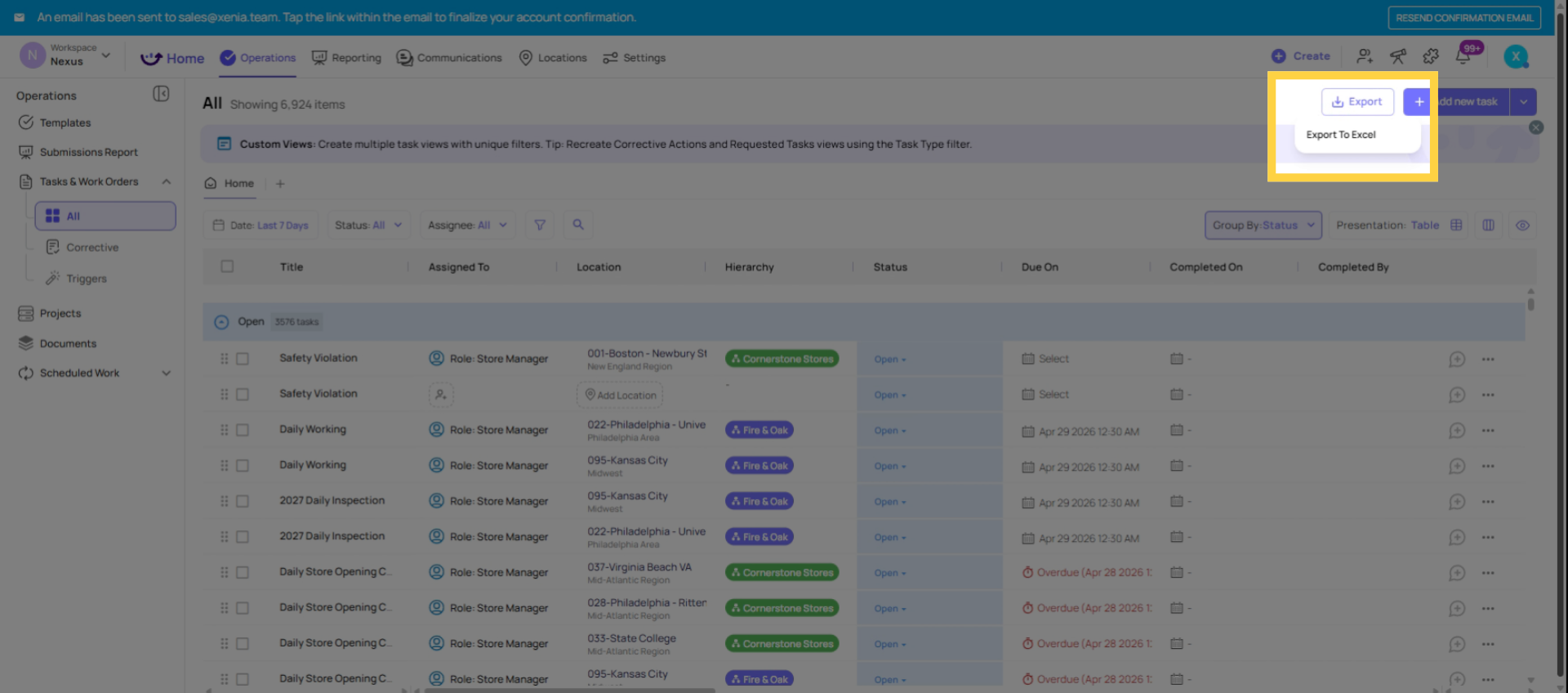
Find the Export or Download option
Select format: PDF or CSV
Download
5. Scheduled Reports (Report Automation)
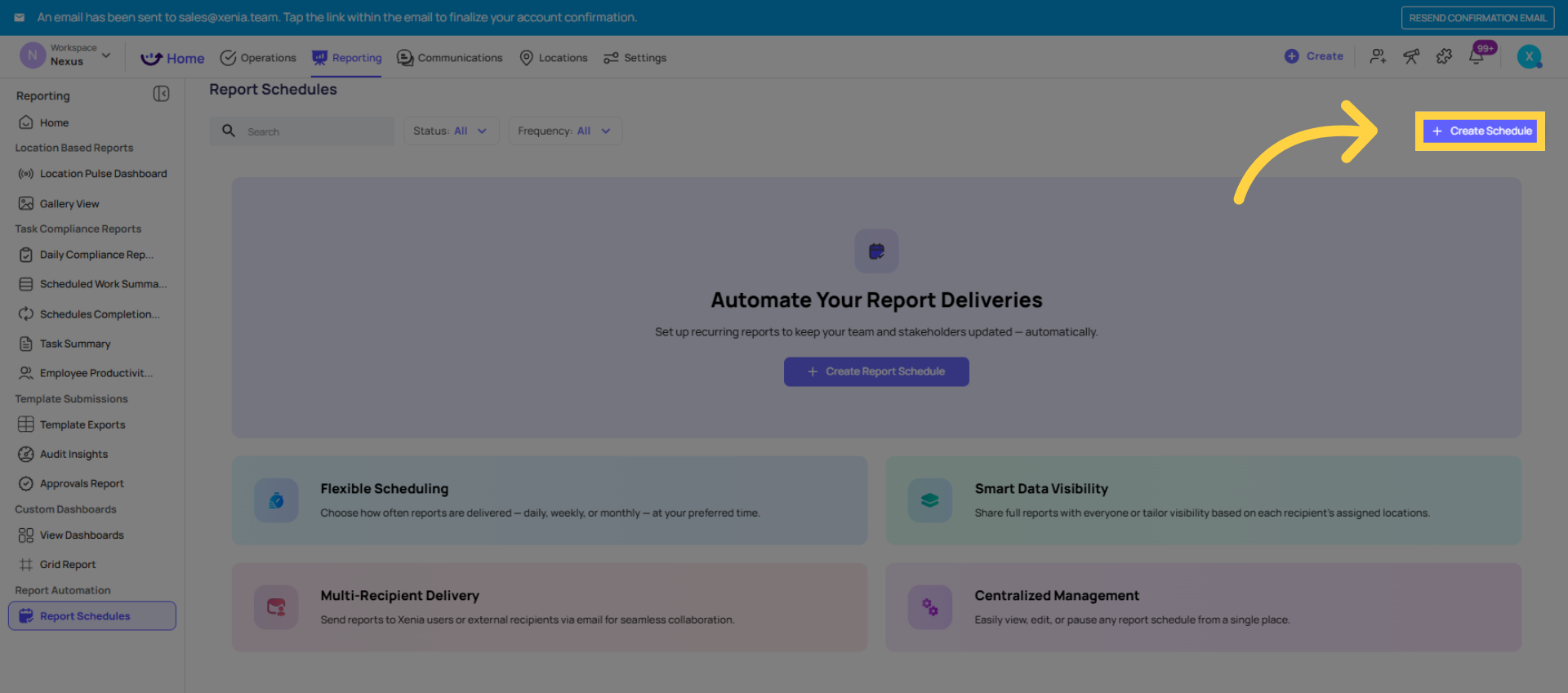
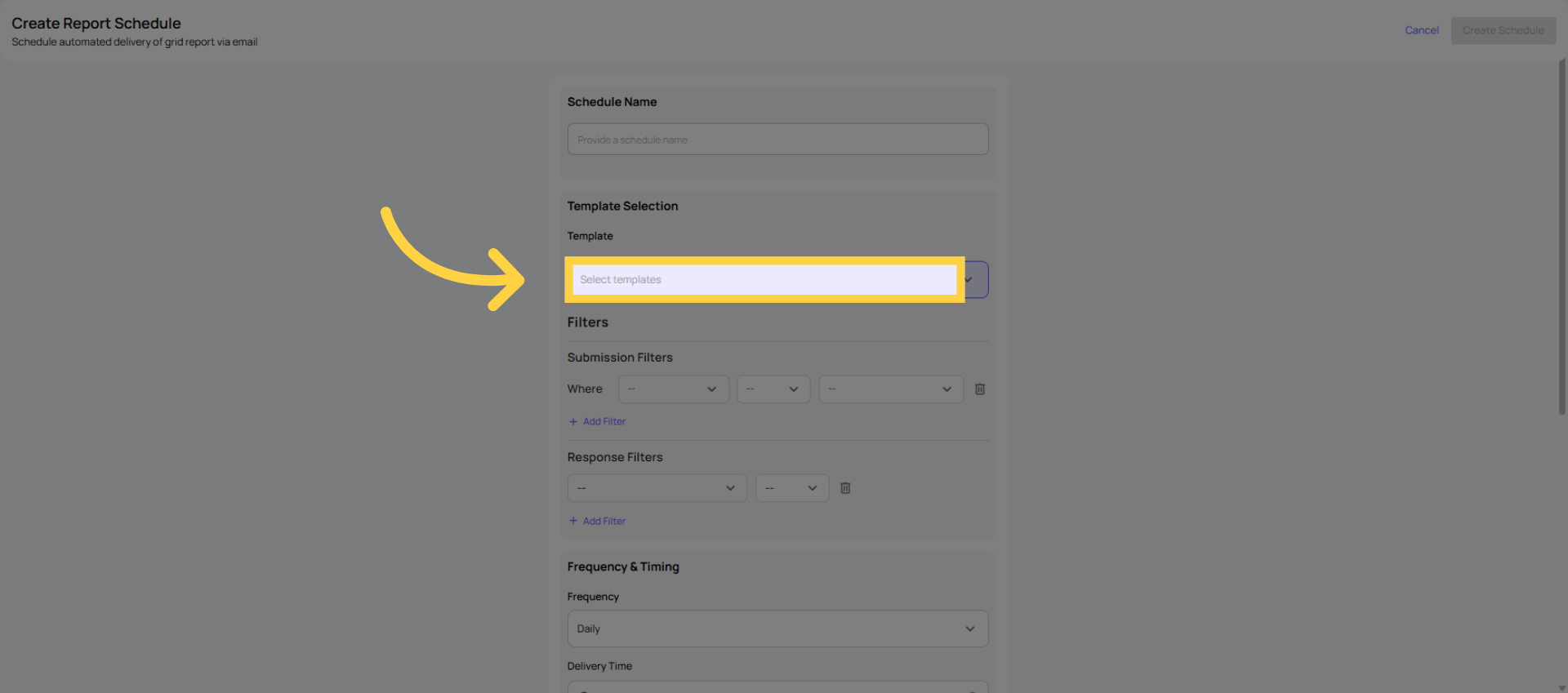
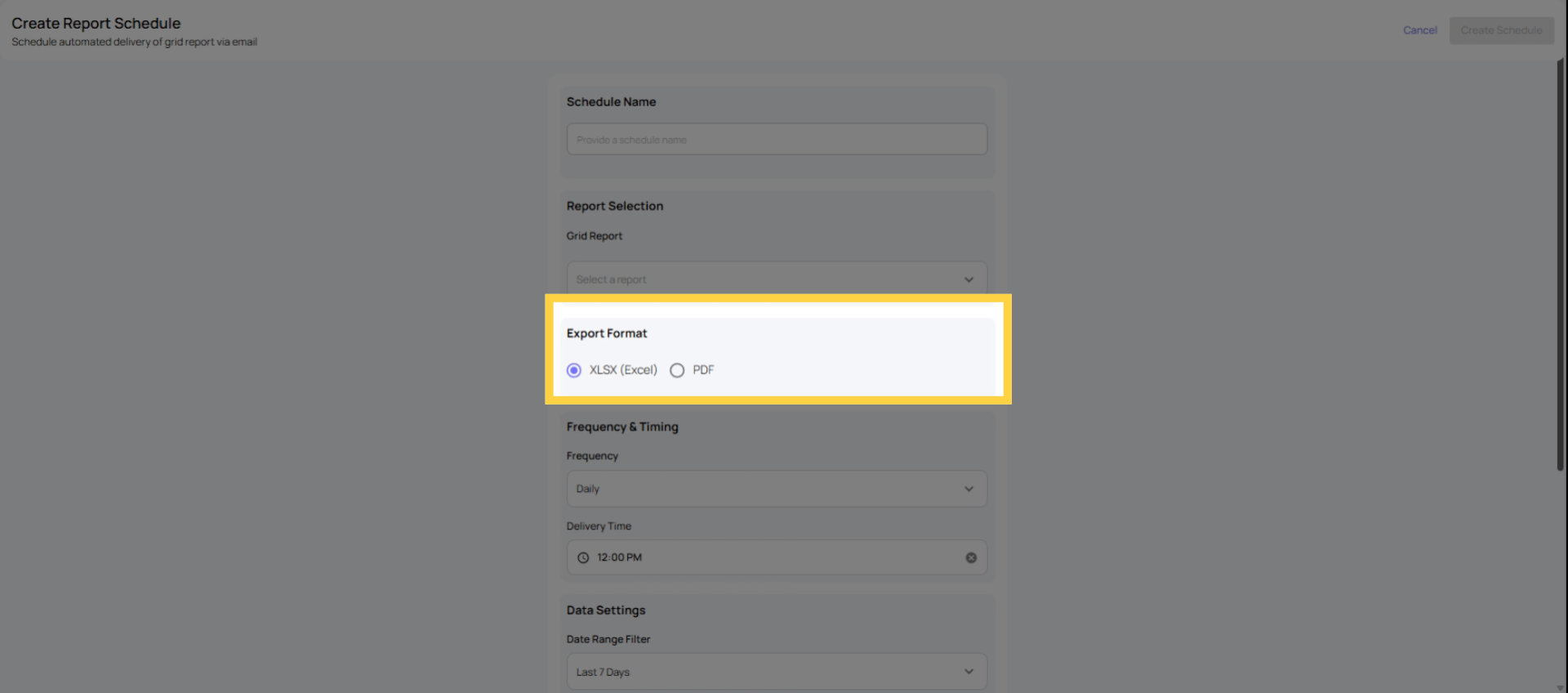
For recurring export needs — weekly audit summaries emailed to area managers, monthly response logs delivered to compliance teams — Xenia's Report Automation feature lets you schedule automatic delivery.
Where to configure: Reporting → Report Automation (or Reports → Create Schedule)
Options:
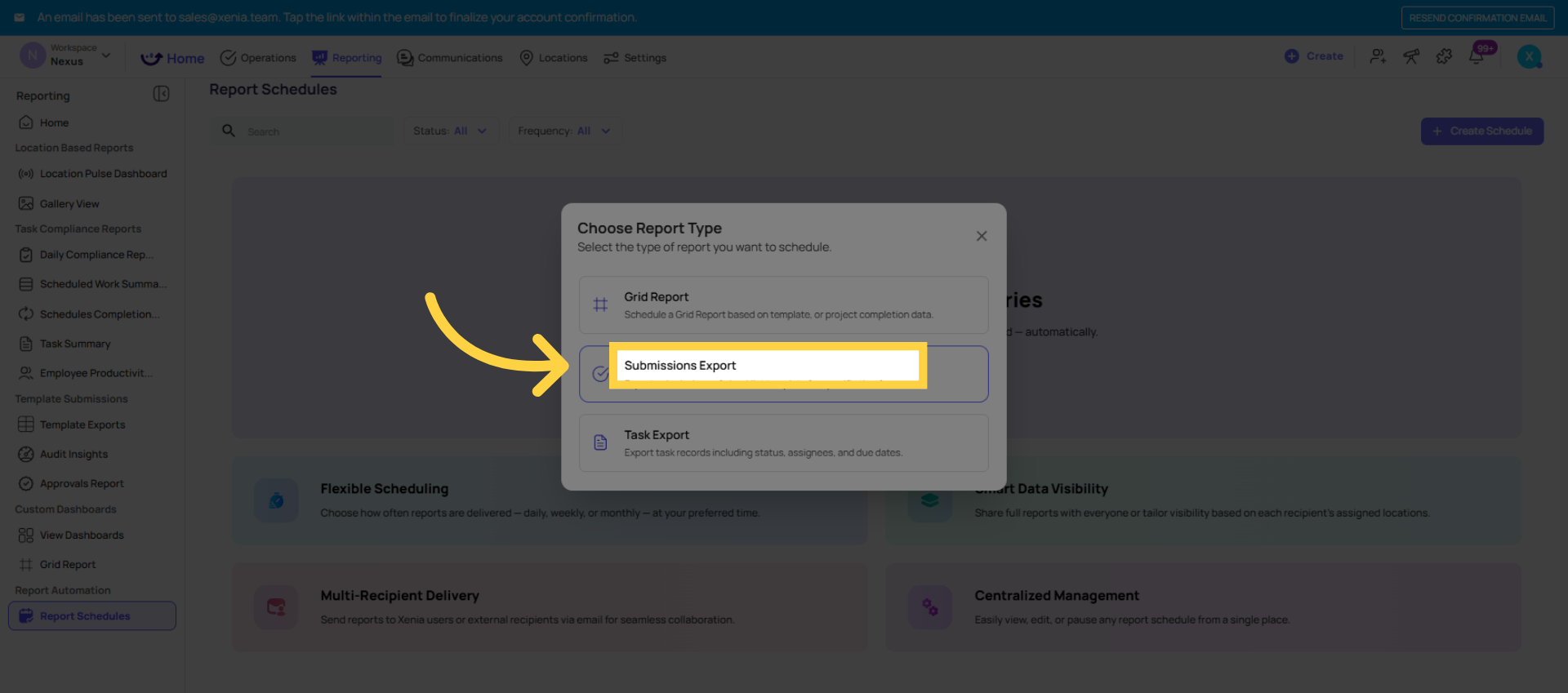
Report type: Grid Report (Excel/CSV), Task Export, Submissions Export
Frequency: Daily, Weekly (with specific day selection), Monthly (with specific day of month)
Recipients: Specific users, roles, or email addresses
Data visibility: Full visibility (all recipients get the same data) or Location-based visibility (each recipient receives only the data for their location memberships — a District Manager receives their district's data; a Regional Manager receives their region's)
Location-based visibility is the critical feature for multi-location operations. When scheduled with location-based visibility, Xenia generates a personalized report for each recipient filtered to their location permissions at the time of generation. A DM covering 5 stores gets those 5 stores' data. An RM covering 3 districts gets all 3 districts. No one sees data outside their access scope.
This article explained how to export audit data from Xenia using various formats and reports, including PDFs, Excel files, and automated recurring reports. You learned how to download individual checklists, bulk data, and work order reports, as well as how to schedule automated report deliveries to keep your team informed.
Need Help?
Reach out to our Support Team at Support@xenia.team